About Us
Geometry Dash is not just a game—it is a test of reflexes, patience, rhythm, and creativity. Since its release, Geometry Dash has captured the attention of millions of players worldwide with its fast-paced gameplay, electronic music, and unforgiving difficulty. What sets it apart from other platformers is its perfect synchronization between movement and sound, turning every level into a rhythmic challenge that feels like playing music with your hands.
At first glance, Geometry Dash looks simple. You control a small geometric icon that moves forward automatically, and your main job is to jump, fly, or flip gravity to avoid obstacles. However, this simplicity is deceptive. Beneath the minimalistic visuals lies one of the most challenging and rewarding platforming experiences in modern gaming.
Core Gameplay Mechanics
The core gameplay of Geometry Dash is based on timing and precision. Players use a single input—usually a tap or click—to control their character. That single action determines everything: survival or instant failure. Spikes, saw blades, moving platforms, and tight corridors demand flawless execution.
Each level scrolls automatically, meaning players must react quickly and memorize patterns. There are no checkpoints in most official levels, so a single mistake sends you back to the beginning. This design may sound harsh, but it is exactly what makes success feel so satisfying. Completing a difficult level after dozens or even hundreds of attempts creates a strong sense of achievement.
The Importance of Music and Rhythm
One of the defining features of Geometry Dash is its deep connection to music. Every jump, movement, and obstacle is carefully synchronized with electronic soundtracks. Players are not just reacting visually—they are also responding to rhythm.
As players improve, they often rely more on sound than sight. Music becomes a guide, helping players anticipate jumps and transitions. This fusion of rhythm game and platformer is what gives Geometry Dash its unique identity and addictive nature.
Difficulty Levels and Progression
Geometry Dash offers a wide range of difficulty levels, from beginner-friendly stages to extremely challenging ones designed for elite players. Levels are typically rated from Easy to Demon, with Demon levels representing the highest challenge in the game.
Progression is not tied to traditional leveling systems. Instead, players improve through practice, muscle memory, and mental focus. The game encourages persistence and learning from failure. Every crash teaches you something new about the level, making improvement feel earned rather than handed out.
Game Modes and Player Forms
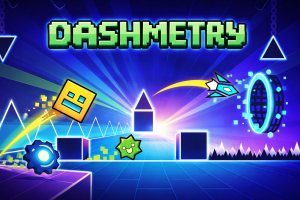
As players progress, they encounter different gameplay modes that change how the character behaves. These include the cube, ship, ball, UFO, wave, spider, and robot forms. Each mode introduces unique physics and mechanics, forcing players to adapt constantly.
This variety keeps gameplay fresh and prevents repetition. Mastery of Geometry Dash means mastering every form and transitioning smoothly between them, often within seconds.